
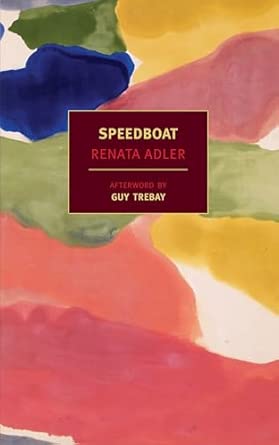
Speedboat is a 1976 modernist novel by Renata Adler that offers a fragmentary account of the experiences of Jen Fain, a young journalist living in New York City.
Prior to Speedboat, Adler was largely known for her nonfiction reportage in The New Yorker. While Speedboat is billed as a novel it includes actual incidents and autobiographical elements; as Adler once remarked, "Some of it was real."
Renata Adler (born October 19, 1937) is an American author, journalist, and film critic. Adler was a staff writer-reporter for The New Yorker for over thirty years and the chief film critic for The New York Times from 1968 to 1969. She has also published several fiction and non-fiction books, and has been awarded the O. Henry Award, a Guggenheim Fellowship, and the PEN/Hemingway Award.
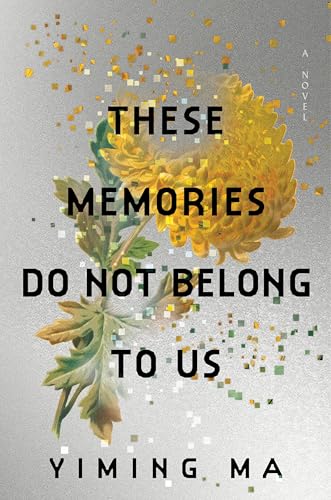
When I was a boy, my mother used to tell me stories of a world before memories could be shared between strangers…
Decades from now, the world is run by an authoritarian state called Qin. In Qin, every citizen is fitted with a Mindbank, an intracranial device capable of not only recording but transferring memories between minds. The technology gives birth to a new economy, referred to as Memory Capitalism, where anyone with means can relive the life experiences of others. It also unleashes opportunities for manipulation—memories can be edited, marketed, and even corrupted for personal gain.
When a man inherits his deceased mother’s Mindbank—a collection of memories from before, during, and after the global war that landed Qin atop the international food chain—he’s unsure what he’ll find inside, or whether the Party has gotten to her memories first, altering the experiences she left for him. Either way, he is adamant that he must share them with the world before they are destroyed forever, even if the cost of doing so is his own life.
Powerful and provocative, These Memories Do Not Belong to Us is a kaleidoscopic look into the ways in which governments and media manipulate history and control our collective imagination. It encourages us to see beyond the sheen of convenient truths to unearth real stories of struggle, sacrifice, and love that, despite all odds, refuse to be eradicated.
Born in Shanghai, YIMING MA spent a decade in the tech and finance world across New York, Toronto, London, Berlin, and South Africa before writing the dystopian novel These Memories Do Not Belong to Us, set in a world where memories are bought and sold.
He attended Stanford for his MBA and also holds an MFA from Warren Wilson College, where he was named the Carol Houck Smith Scholar. His stories and essays have appeared in the New York Times, The Guardian, The Florida Review, and elsewhere. His story “Swimmer of Yangtze” won the 2018 Guardian 4th Estate Story Prize.
He’s a first-generation immigrant and, despite his travels, he’s still figuring out where home is.
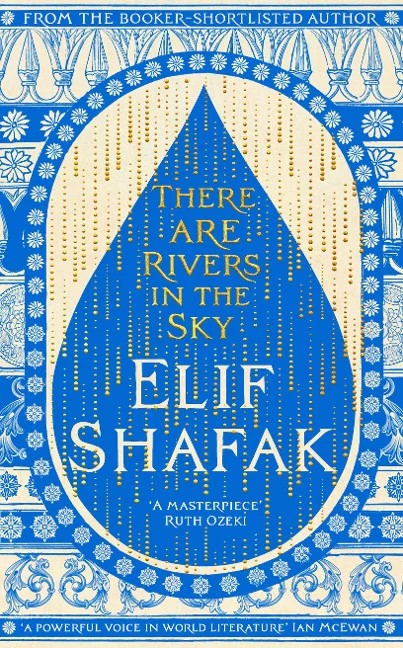
In the ancient city of Nineveh, on the bank of the River Tigris, King Ashurbanipal of Mesopotamia, erudite but ruthless, built a great library that would crumble with the end of his reign. From its ruins, however, emerged a poem, the Epic of Gilgamesh, that would infuse the existence of two rivers and bind together three lives.
In 1840 London, Arthur is born beside the stinking, sewage-filled River Thames. With an abusive, alcoholic father and a mentally ill mother, Arthur’s only chance of escaping destitution is his brilliant memory. When his gift earns him a spot as an apprentice at a leading publisher, Arthur’s world opens up far beyond the slums, and one book in particular catches his interest: Nineveh and Its Remains.
In 2014 Turkey, Narin, a ten-year-old Yazidi girl, is diagnosed with a rare disorder that will soon cause her to go deaf. Before that happens, her grandmother is determined to baptize her in a sacred Iraqi temple. But with the rising presence of ISIS and the destruction of the family’s ancestral lands along the Tigris, Narin is running out of time.
In 2018 London, the newly divorced Zaleekah, a hydrologist, moves into a houseboat on the Thames to escape her husband. Orphaned and raised by her wealthy uncle, Zaleekah had made the decision to take her own life in one month, until a curious book about her homeland changes everything.
A dazzling feat of storytelling, There Are Rivers in the Sky entwines these outsiders with a single drop of water, a drop which remanifests across the centuries. Both a source of life and harbinger of death, rivers—the Tigris and the Thames—transcend history, transcend fate: “Water remembers. It is humans who forget.”
Elif Shafak (Turkish: Elif Şafak [eˈlif ʃaˈfak]; née Bilgin; born 25 October 1971) is a Turkish-British novelist, essayist, public speaker, political scientist, and activist.
Shafak[a] writes in Turkish and English, and has published 21 books. She is best known for her novels, which include The Bastard of Istanbul, The Forty Rules of Love, Three Daughters of Eve, 10 Minutes 38 Seconds in This Strange World, and The Island of Missing Trees. Her works have been translated into 57 languages and have been nominated for several literary awards. She has been described by the Financial Times as "Turkey's leading female novelist", with several of her works having been bestsellers in Turkey and internationally.
Her works have prominently featured the city of Istanbul, and dealt with themes of Eastern and Western culture, roles of women in society, and human rights issues. Certain politically challenging topics addressed in her novels, such as child abuse and the Armenian genocide, have led to legal action from authorities in Turkey[4][5] that prompted her to emigrate to the United Kingdom.
Shafak has a PhD in political science. An essayist and contributor to several media outlets, Shafak has advocated for women's rights, minority rights, and freedom of speech.
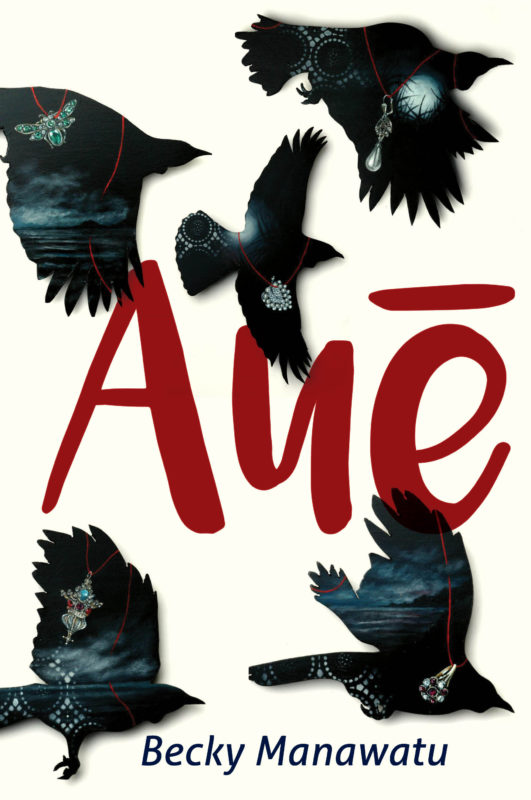
Taukiri was born into sorrow. Auē can be heard in the sound of the sea he loves and hates, and in the music he draws out of the guitar that was his father’s. It spills out of the gang violence that killed his father and sent his mother into hiding, and the shame he feels about abandoning his eight-year-old brother to a violent home.
But Ārama is braver than he looks, and he has a friend and his friend has a dog, and the three of them together might just be strong enough to turn back the tide of sorrow. As long as there’s aroha to give and stories to tell and a good supply of plasters.
Here is a novel that is both raw and sublime, a compelling new voice in New Zealand fiction. Haere mai, Becky Manawatu.
Becky Manawatu (Ngāi Tahu) was born in Nelson in 1982, raised in Waimangaroa and has returned there to live with her family. She worked as a reporter for The News in Westport.
Becky’s short story ‘Abalone’ was long-listed for the 2018 Commonwealth Short Story Prize, her essay ‘Mothers Day’ has been selected for the Landfall anthology Strong Words.
Auē is her first novel & it won both the Jann Medlicott Acorn Prize for Fiction and the Hubert Church Prize for best first book of fiction at the 2020 Ockham Book Awards.
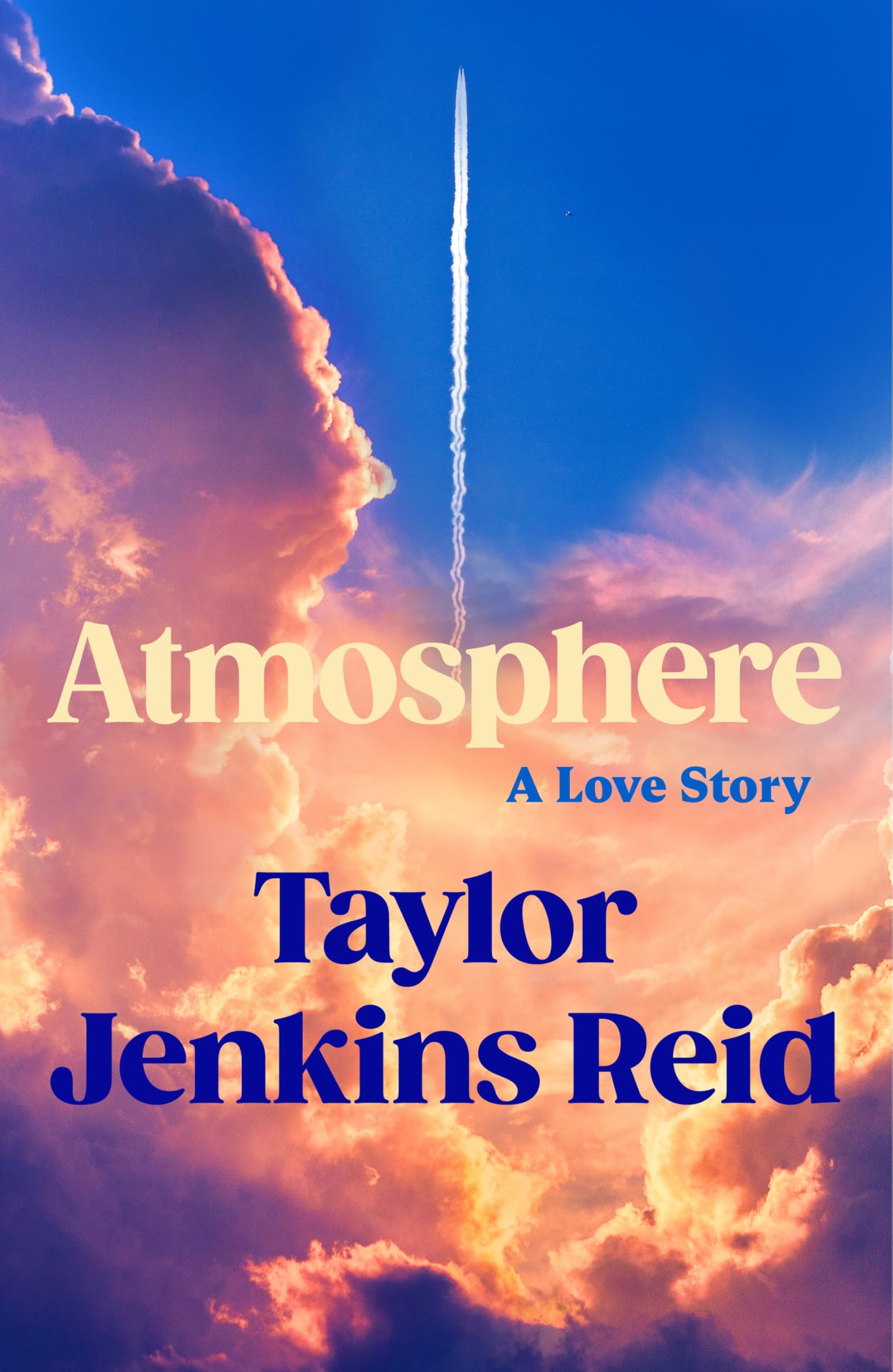
Joan Goodwin has been obsessed with the stars for as long as she can remember. Thoughtful and reserved, Joan is content with her life as a professor of physics and astronomy at Rice University and as aunt to her precocious niece, Frances. That is, until she comes across an advertisement seeking the first women scientists to join NASA’s space shuttle program. Suddenly, Joan burns to be one of the few people to go to space.
Selected from a pool of thousands of applicants in the summer of 1980, Joan begins training at Houston’s Johnson Space Center, alongside an exceptional group of fellow candidates: Top Gun pilot Hank Redmond and scientist John Griffin, who are kind and easygoing even when the stakes are highest; mission specialist Lydia Danes, who has worked too hard to play nice; warmhearted Donna Fitzgerald, who is navigating her own secrets; and Vanessa Ford, the magnetic and mysterious aeronautical engineer, who can fix any engine and fly any plane.
As the new astronauts become unlikely friends and prepare for their first flights, Joan finds a passion and a love she never imagined. In this new light, Joan begins to question everything she thinks she knows about her place in the observable universe.
Then, in December of 1984, on mission STS-LR9, it all changes in an instant.
Fast-paced, thrilling, and emotional, Atmosphere is Taylor Jenkins Reid at her best: transporting readers to iconic times and places, creating complex protagonists, and telling a passionate and soaring story about the transformative power of love—this time among the stars.
Taylor Jenkins Reid is the author of the New York Times Bestselling novels Atmosphere, Carrie Soto Is Back, Malibu Rising, Daisy Jones and The Six and The Seven Husbands of Evelyn Hugo, as well as One True Loves, Maybe in Another Life, After I Do, and Forever, Interrupted. Her books have been chosen by Reese’s Book Club, Read with Jenna, GMA Book Club, Indie Next, Best of Amazon, and Book of the Month. Her novel, Daisy Jones and The Six, is now a limited series on Amazon Prime. She lives in Los Angeles.
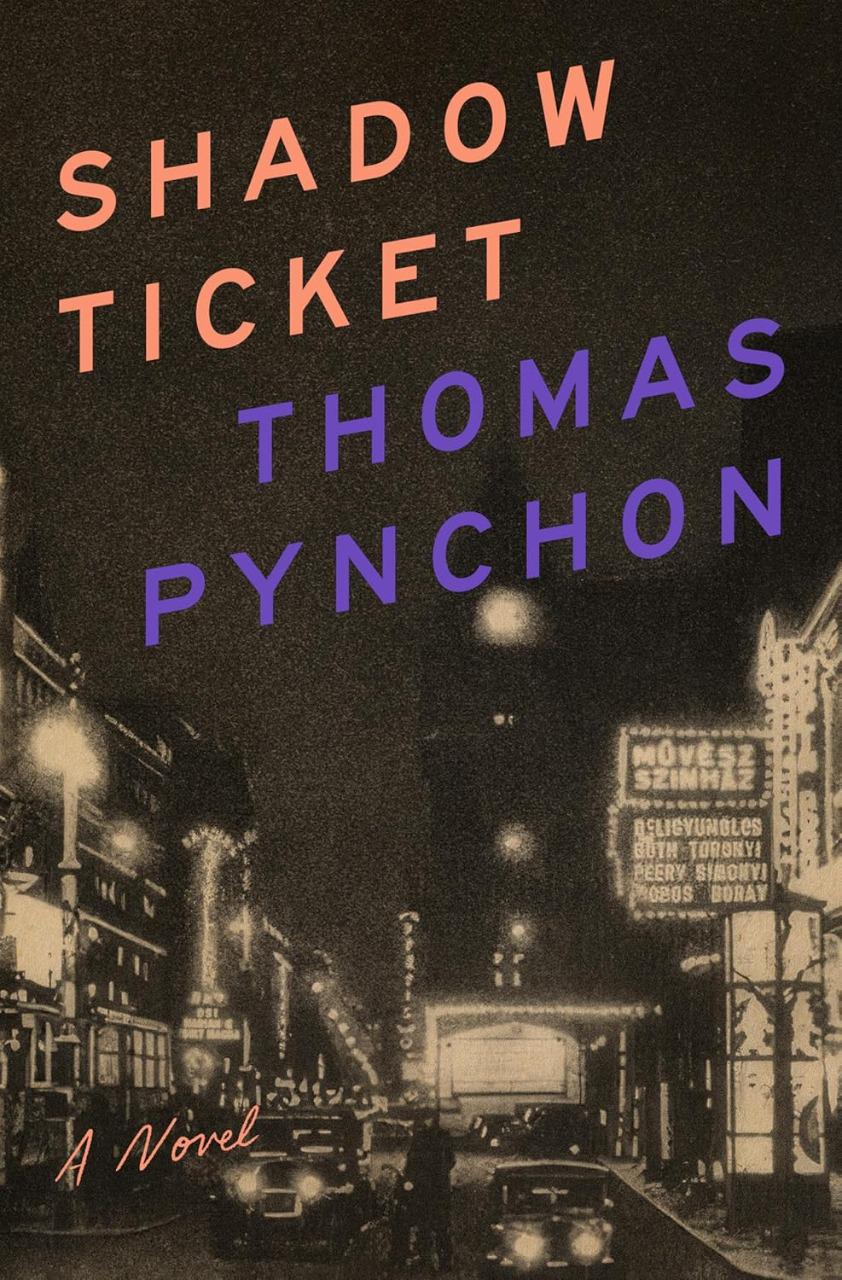
Milwaukee 1932, the Great Depression going full blast, repeal of Prohibition just around the corner, Al Capone in the federal pen, the private investigation business shifting from labor-management relations to the more domestic kind. Hicks McTaggart, a one-time strikebreaker turned private eye, thinks he’s found job security until he gets sent out on what should be a routine case, locating and bringing back the heiress of a Wisconsin cheese fortune who’s taken a mind to go wandering. Before he knows it, he’s been shanghaied onto a transoceanic liner, ending up eventually in Hungary where there’s no shoreline, a language from some other planet, and enough pastry to see any cop well into retirement—and of course no sign of the runaway heiress he’s supposed to be chasing. By the time Hicks catches up with her he will find himself also entangled with Nazis, Soviet agents, British counterspies, swing musicians, practitioners of the paranormal, outlaw motorcyclists, and the troubles that come with each of them, none of which Hicks is qualified, forget about being paid, to deal with. Surrounded by history he has no grasp on and can’t see his way around in or out of, the only bright side for Hicks is it’s the dawn of the Big Band Era and as it happens he’s a pretty good dancer. Whether this will be enough to allow him somehow to lindy-hop his way back again to Milwaukee and the normal world, which may no longer exist, is another question.
Thomas Pynchon is the author of V.; The Crying of Lot 49; Gravity’s Rainbow; Slow Learner, a collection of short stories; Vineland; Mason & Dixon; Against the Day; and, most recently, Inherent Vice. He received the National Book Award for Gravity’s Rainbow in 1974.
Thomas Ruggles Pynchon Jr. is an American novelist noted for his dense and complex novels. His fiction and nonfiction writings encompass a vast array of subject matter, genres and themes, including history, music, science, and mathematics. For Gravity's Rainbow, Pynchon won the 1973 U.S. National Book Award for Fiction.
Hailing from Long Island, Pynchon served two years in the United States Navy and earned an English degree from Cornell University. After publishing several short stories in the late 1950s and early 1960s, he began composing the novels for which he is best known: V. (1963), The Crying of Lot 49 (1966), and Gravity's Rainbow (1973). Rumors of a historical novel about Charles Mason and Jeremiah Dixon had circulated as early as the 1980s; the novel, Mason & Dixon, was published in 1997 to critical acclaim. His 2009 novel Inherent Vice was adapted into a feature film by Paul Thomas Anderson in 2014. Pynchon is notoriously reclusive from the media; few photographs of him have been published, and rumors about his location and identity have circulated since the 1960s. Pynchon's most recent novel, Bleeding Edge, was published on September 17, 2013.
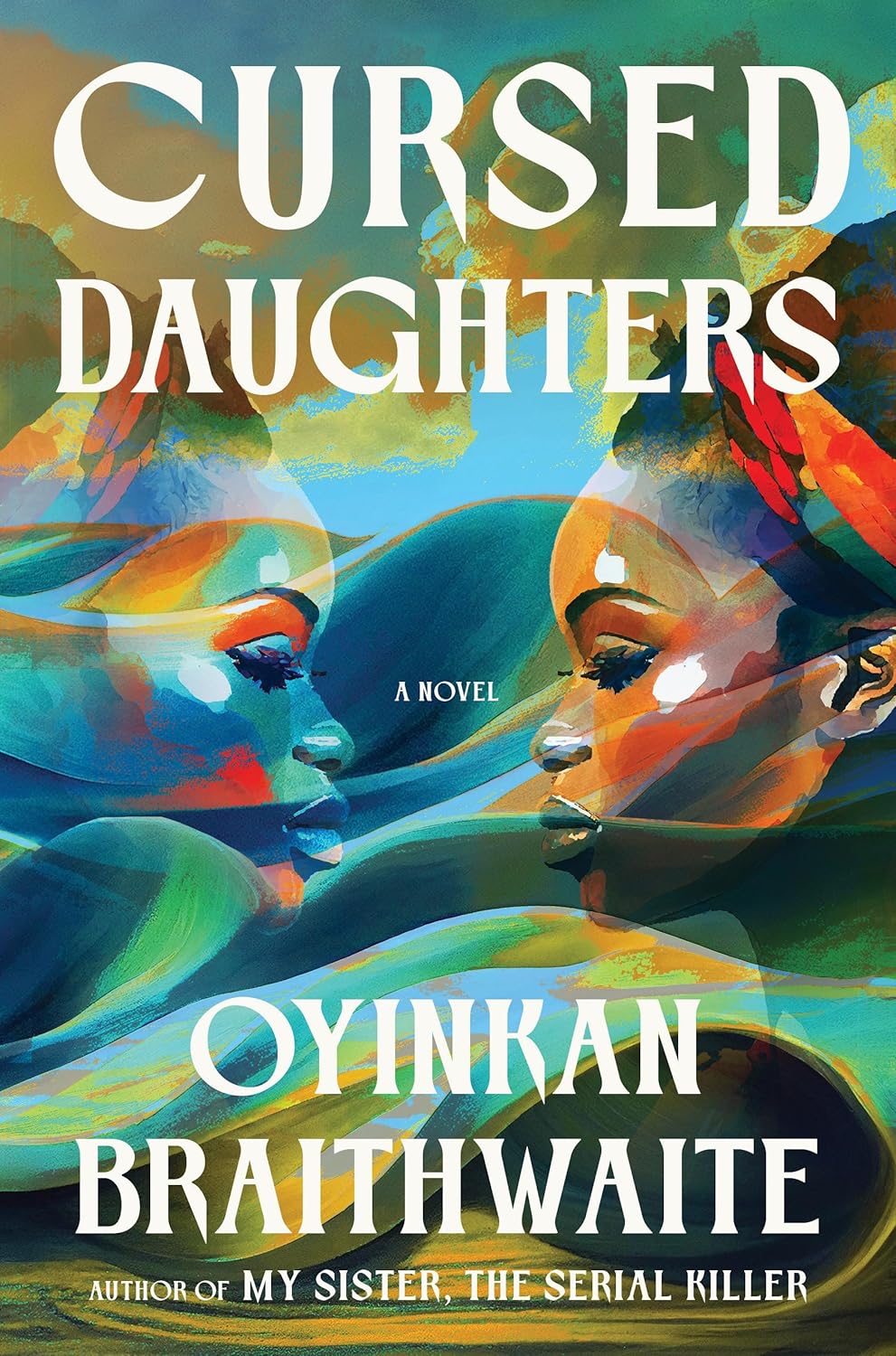
When Ebun gives birth to her daughter, Eniiyi, on the day they bury her cousin Monife, there is no denying the startling resemblance between the child and the dead woman. So begins the belief, fostered and fanned by the entire family, that Eniiyi is the actual reincarnation of Monife, fated to follow in her footsteps in all ways, including that tragic end.
There is also the matter of the family curse: “No man will call your house his home. And if they try, they will not have peace...” which has been handed down from generation to generation, breaking hearts and causing three generations of abandoned Falodun women to live under the same roof.
When Eniiyi falls in love with the handsome boy she saves from drowning, she can no longer run from her family’s history. As several women in her family have done before, she ill-advisedly seeks answers in older, darker spiritual corners of Lagos, demanding solutions. Is she destined to live out the habitual story of love and heartbreak? Or can she break the pattern once and for all, not only avoiding the spiral that led Monife to her lonely death, but liberating herself from all the family secrets and unspoken traumas that have dogged her steps since before she could remember?
Cursed Daughters is a brilliant cocktail of modernity and superstition, vibrant humor and hard-won wisdom, romantic love and familial obligation. With it’s unforgettable cast of characters, it asks us what it means to be given a second chance and how to live both wisely and well with what we’ve been given.
(born 1988) is a Nigerian-UK novelist and writer. She was born in Lagos and spent her childhood in both Nigeria and the UK.
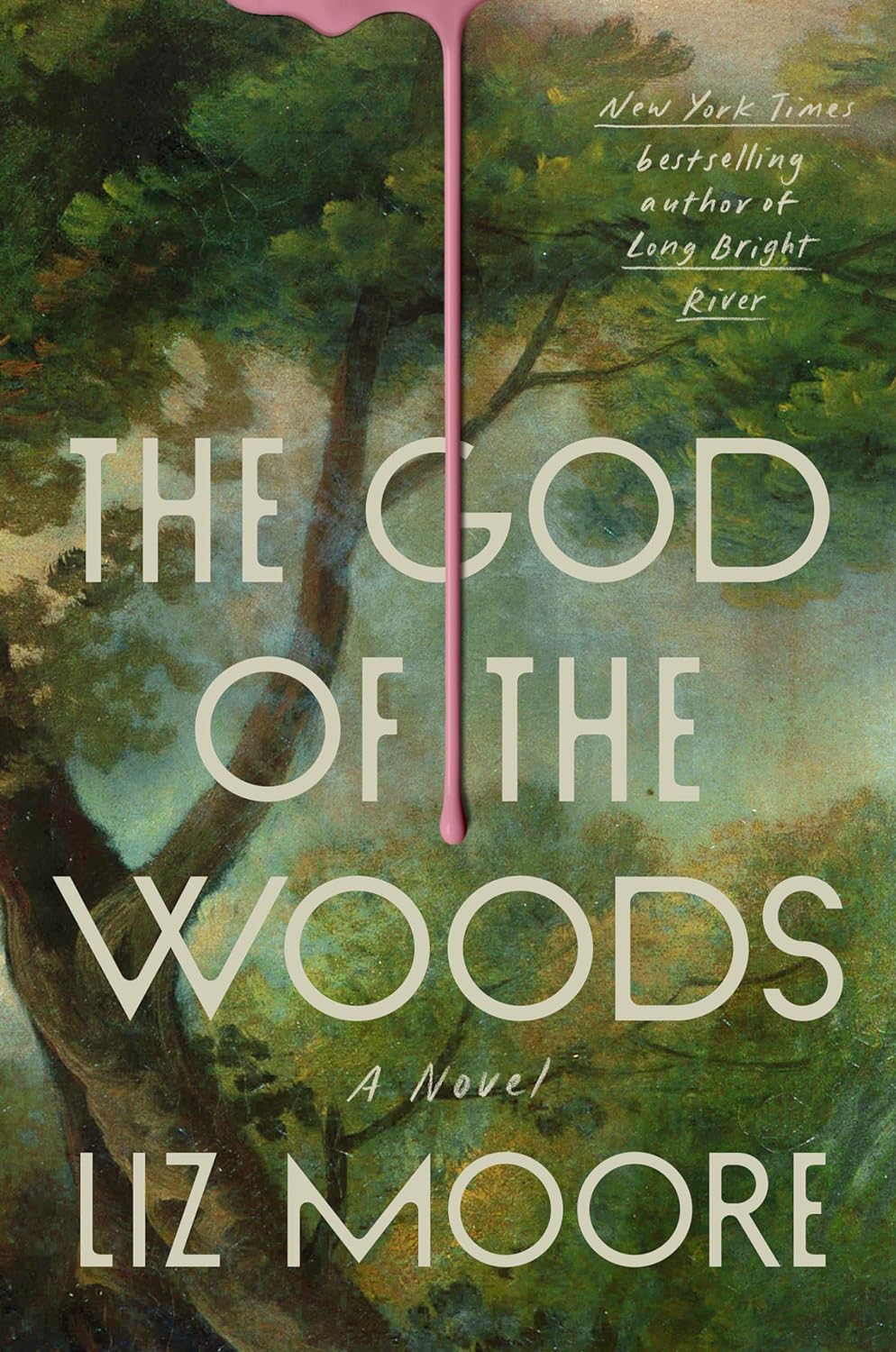
Early morning, August 1975: a camp counselor discovers an empty bunk. Its occupant, Barbara Van Laar, has gone missing. Barbara isn’t just any thirteen-year-old: she’s the daughter of the family that owns the summer camp and employs most of the region’s residents. And this isn’t the first time a Van Laar child has disappeared. Barbara’s older brother similarly vanished fourteen years ago, never to be found.
As a panicked search begins, a thrilling drama unfolds. Chasing down the layered secrets of the Van Laar family and the blue-collar community working in its shadow, Moore’s multi-threaded story invites readers into a rich and gripping dynasty of secrets and second chances. It is Liz Moore’s most ambitious and wide-reaching novel yet.
Liz Moore is the author of the novels THE WORDS OF EVERY SONG (Broadway Books, 2007), HEFT (W.W. Norton, 2012), THE UNSEEN WORLD (W.W. Norton, 2016), and the New York Times-bestselling Long Bright River (Riverhead, 2019). A winner of the Rome Prize in Literature, she lives in Philadelphia with her family, and teaches in the M.F.A. program in Creative Writing at Temple University.
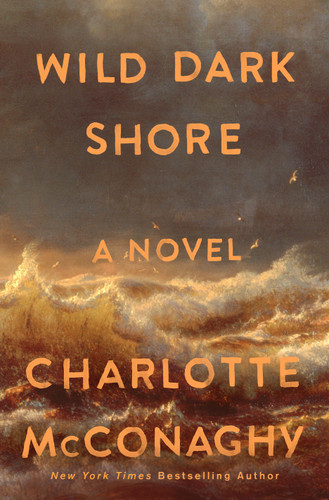
A family on a remote island. A mysterious woman washed ashore. A rising storm on the horizon.
Dominic Salt and his three children are caretakers of Shearwater, a tiny island not far from Antarctica. Home to the world’s largest seed bank, Shearwater was once full of researchers, but with sea levels rising, the Salts are now its final inhabitants. Until, during the worst storm the island has ever seen, a woman mysteriously washes ashore.
Isolation has taken its toll on the Salts, but as they nurse the woman, Rowan, back to strength, it begins to feel like she might just be what they need. Rowan, long accustomed to protecting herself, starts imagining a future where she could belong to someone again.
But Rowan isn’t telling the whole truth about why she set out for Shearwater. And when she discovers sabotaged radios and a freshly dug grave, she realizes Dominic is keeping his own secrets. As the storms on Shearwater gather force, they all must decide if they can trust each other enough to protect the precious seeds in their care before it’s too late―and if they can finally put the tragedies of the past behind them to create something new, together.
A novel of breathtaking twists, dizzying beauty, and ferocious love, Wild Dark Shore is about the impossible choices we make to protect the people we love, even as the world around us disappears.
Charlotte McConaghy is the author of the New York Times, USA Today, and Indie Bestseller WILD DARK SHORE, named Amazon’s Best Book of the Year So Far for 2025; as well as the New York Times Bestseller ONCE THERE WERE WOLVES, winner of the Indie Book Award for Fiction 2022; and the international bestseller MIGRATIONS, a TIME Magazine Best Book of the Year and the Amazon Best Fiction Book of the Year for 2020.
She started her writing career with a number of SF/F titles for YA readers; MIGRATIONS was her first foray into adult literature.
Her books have been translated into more than 25 languages, and are being adapted for film and television. She lives in Sydney with her partner and two children.
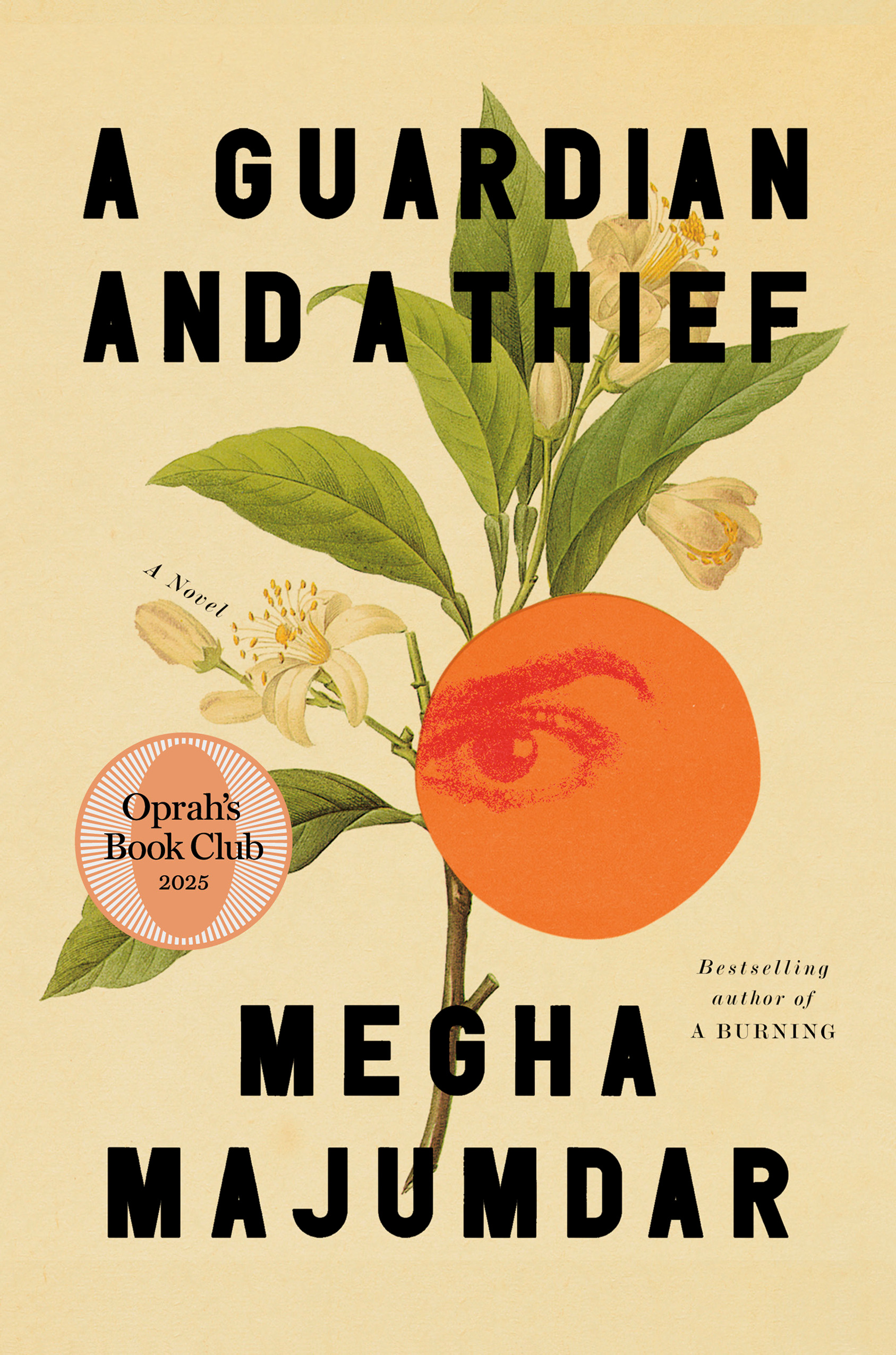
Megha Majumdar’s electrifying new novel, following her acclaimed New York Times bestseller A Burning —longlisted for the National Book Award—is set in a near-future Kolkata, India, ravaged by climate change and food scarcity, in which two families seeking to protect their children must battle each other. A piercing and propulsive tour de force.
In a near-future Kolkata beset by flooding and famine, Ma, her two-year-old daughter, and her elderly father are just days from leaving the collapsing city behind to join Ma’s husband in Ann Arbor, Michigan. After procuring long-awaited visas from the consulate, they pack their bags for the flight to America. But in the morning they awaken to discover that Ma’s purse, containing their treasured immigration documents, has been stolen.
Set over the course of one week, A Guardian and a Thief tells two the story of Ma’s frantic search for the thief while keeping hunger at bay during a worsening food shortage; and the story of Boomba, the thief, whose desperation to care for his family drives him to commit a series of escalating crimes whose consequences he cannot fathom. With stunning control and command, Megha Majumdar paints a kaleidoscopic portrait of two families, each operating from a place of ferocious love and undefeated hope, each discovering how far they will go to secure their children’s future as they stave off encroaching catastrophe.
A masterful new work from one of the most exciting voices of her generation.
MEGHA MAJUMDAR is the author of the forthcoming novel A Guardian and a Thief. Her first book, the New York Times bestselling novel A Burning, was nominated for the National Book Award, the National Book Critics Circle's John Leonard Prize, and the American Library Association's Andrew Carnegie Medal. In India, it won a Sahitya Akademi Yuva Puraskar. It was named one of the best books of the year by media including The Washington Post, The New York Times, NPR, The Atlantic, Vogue, and TIME Magazine. Her work has been supported by the Whiting, Civitella Ranieri, and Hawthornden foundations. Born and raised in Kolkata, India, she now lives in New York.

In 1922, Count Alexander Rostov is deemed an unrepentant aristocrat by a Bolshevik tribunal. He is sentenced to house arrest in the Metropol, a grand hotel across the street from the Kremlin. Rostov, an indomitable man of erudition and wit, has never worked a day in his life, and must now live in an attic room while some of the most tumultuous decades in Russian history are unfolding outside the hotel’s doors. Unexpectedly, his reduced circumstances give him access to a much larger world of emotional discovery.
Brimming with humor, a glittering cast of characters, and one beautifully rendered scene after another, this singular novel casts a spell as it relates the count’s endeavor to gain a deeper understanding of what it means to be a man of purpose.
Amor Towles (born 1964) is an American novelist. He is best known for his bestselling novels Rules of Civility (2011), A Gentleman in Moscow (2016), and The Lincoln Highway (2021). Towles was born and raised in Boston, Massachusetts. He graduated from Yale College and received an M.A in English from Stanford University.